Sophie Zénon Petit herbier Merveilleux d'outre-mer Tirage de tête juin 2026
Sophie Zénon Petit herbier Merveilleux d'outre-mer Tirage de tête juin 2026
Impossible de charger la disponibilité du service de retrait
Sophie Zénon
"Au premier regard, on perçoit la beauté délicate de feuilles célébrées
comme sujet. La photographie métamorphose la plante pour lui donner l’aspect
d’une porcelaine sensible. La lumière rasante de la prise de vue met en valeur le relief
des nervures, la puissance de la tige, en évitant la saturation, un liseré blanc apparaît
qui souligne le dessin de la feuille et lui donne un ton diaphane. Les tournures
élégantes, les volutes gracieuses parfois froufroutantes, séduisent. Et puis, des détails
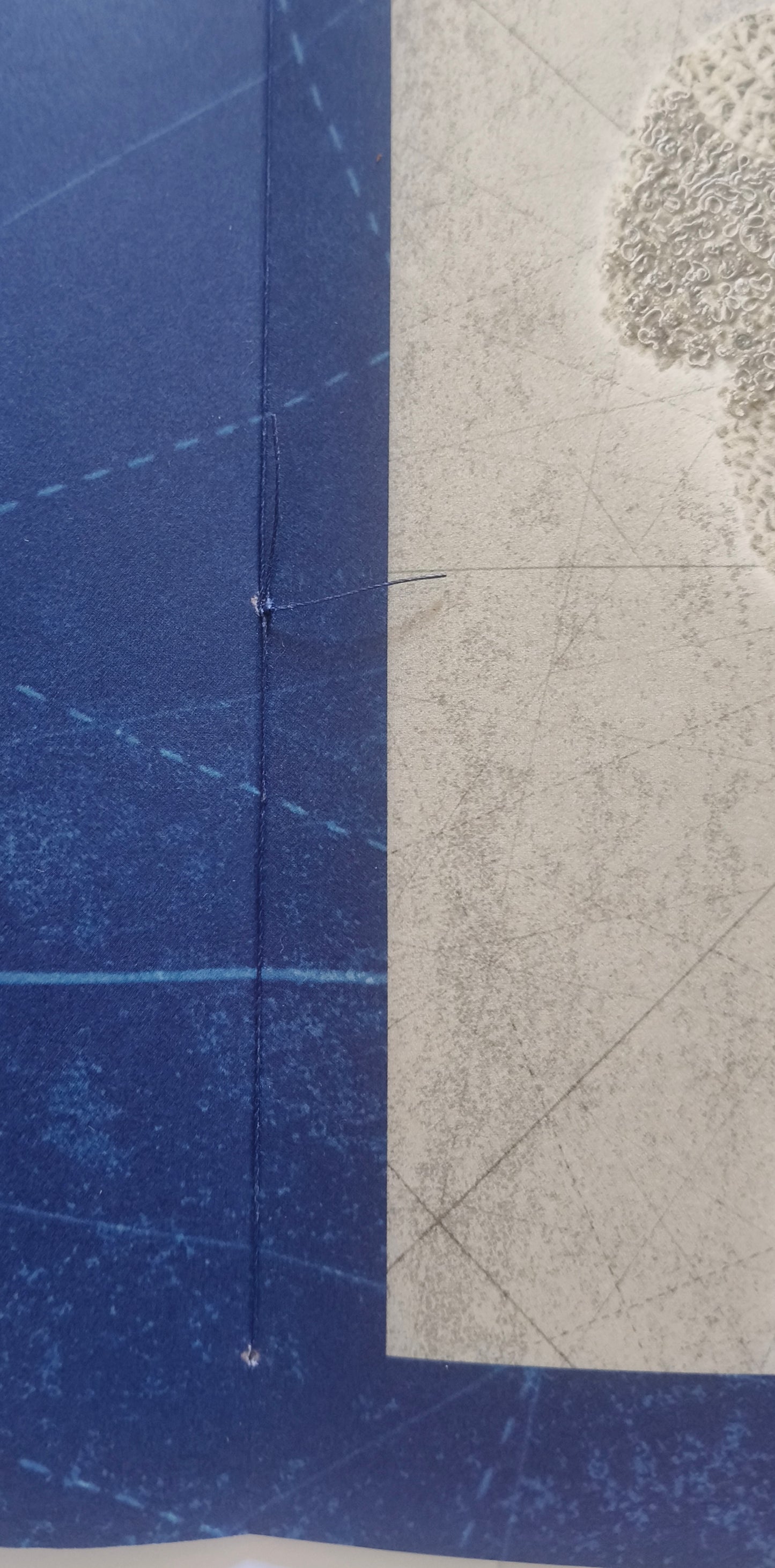
apparaissent. De mystérieuses lignes rigoureuses, parfois scintillantes ordonnent le
fond comme pour indiquer des directions, des trajets à suivre. Leur relief sur le papier
japon révèle le piqué d’une aiguille sous la loupe. La courbure des pétioles, des
nervures est soulignée de fils de soie aux teintes délicates, de fins cordeaux brillants,
les limbes sont ornés de vrilles d’or et d’argent. Les photographies sont rehaussées
de broderies. Mais de broderies particulières, dites à la cannetille, petit fil de cuivre
gainé de métaux précieux réagissant comme de fins ressorts, pareilles à celles qui
ornent les uniformes militaires, un savoir-faire ici mis en œuvre par Sylvie
Deschamps, Maître d’art, brodeuse au fil d’or."
(...)
"Le point de jonction entre le bégonia, incarnation jusqu’à la lie de la plante
ornementale, et les broderies des parements militaires, c’est Rochefort, une ville
suffisamment lointaine de l’estuaire de la Charente pour être protégée de puissances
maritimes belligérantes, facile à approvisionner par le fleuve, idéale pour y implanter
un arsenal militaire. Rochefort ce sont aussi les expéditions scientifiques et l’arrivée
de plantes inconnues qui seront dispersées dans les jardins botaniques d’Europe.
Parmi celles rapportées de la Caraïbe, six petites plantes herbacées sont découvertes
en 1690 par le moine botaniste Charles Plumier (1646-1704) qu’il baptise Bégonia
en l’honneur de son bienfaiteur Michel Bégon (1638-1710), intendant de Louis XIV
et de la marine de Rochefort."
(...)
"Les photographies de Sophie Zénon offrent à ces infrangibles une carnation de
kaolin que les fil d’or et d’argent militaire viennent magnifier. Ces fils brodés aux point
lancé, point Boulogne, de sable, au passé empiétant, deviennent stigmates de conquêtes, de
migrations, d’esclavagisme, de cette soif d’obtenir les métaux les plus précieux. Tant
de beauté pour tant d’effroi."
Jean-Benoît Patricot (extraits).
Biographie de Sophie Zénon
Photographer Sophie Zénon’s work revolves around recurring themes — temporality, presence within absence, the fragility of human and non-human life, as well as the mechanisms of memory, exile, the sense of belonging, and identity — explored through the relationship between the body, the landscape, and the elements. Across her series, she builds bridges between intimate and collective history, where “the present is a receptacle of accumulated times and stories (...) which she crystallizes through trace, metaphor and wonder, giving them a form renewed each time” (Christine Coste, L’Oeil, May 2023).
Photographs, reactivated archives, artist’s books, videos, installations, as well as glass engravings, monotypes, woven and shaped imprints: Sophie Zénon’s work unfolds as a protean narrative, revealing the importance she gives to experimentation, materiality, and the hybridization of media, sometimes in collaboration with skilled craftspeople. From this practice emerge organic, vibrant, and poetic works, guided by notions of fragility, impermanence, and the breath of life.
Sophie Zénon was born in Normandy; she lives and works in Paris.
After studying contemporary history, art history, and ethnology, focusing on shamanism in East Asia (Mongolia, Siberia), she began her artistic practice in the late 1990s with delicate miniature landscapes made in Mongolia. In this country, which fascinates her for the intimate relationship its inhabitants maintain with nature and the spiritual forces animating it, she travelled for more than ten years. From 2008 to 2011, she produced several works relating to questions of the representation of the body after death (In Case We Die cycle). From 2010 onward, she began a new cycle, Arborescences, an exploration of mourning, exile, and family memory, addressing the relationship between landscape, territory, memory, and the construction of self. Her more recent works (Rémanences cycle, since 2017) focus on the memory of landscapes from the perspective of vegetation, at once a marker of history and its traces, fragile yet always nourishing and regenerative.
Her works have entered public collections (Bibliothèque nationale de France, Maison Européenne de la Photographie, Mobilier national, Manufacture de Sèvres, Le Château d’Eau, Les Abattoirs, Musée de la Photographie de Bièvres) and numerous private collections (Fondation des Treilles, Collection d'entreprise Neuflize OBC, Fondation Eurazeo). They have been exhibited in Europe and internationally since 2000 in venues such as the Palais de Tokyo, the BnF, the Mobilier national, the Fondation Pierre Bergé / YSL in Paris, as well as Galerie du Château d’Eau (Toulouse), Domaine de Chaumont-sur-Loire, Fondation Fernet-Branca (Saint-Louis), Fondation François Schneider (Wattwiller), and the Houston Center for Photography (United States).
She has received several distinctions, including support for the creation of artworks from the Fondation des Artistes (2022), the Eurazeo Prize (2019), the “Résidence pour la photographie” prize from the Fondation des Treilles (2015), the Kodak Critique Prize (1999), and was a finalist for the Marc Ladreit de Lacharrière / Académie des Beaux-Arts photo prize (2024), the Villa Kujoyama (2023), and the Prix Niépce (2015).
She is represented by Galerie XII (Paris and Los Angeles) and by Galerie Lee Bauwens (Brussels, Belgium).